
Beautyworld ME 2025: Fragrance brands must win loyalty through emotion, innovation and cultural insight
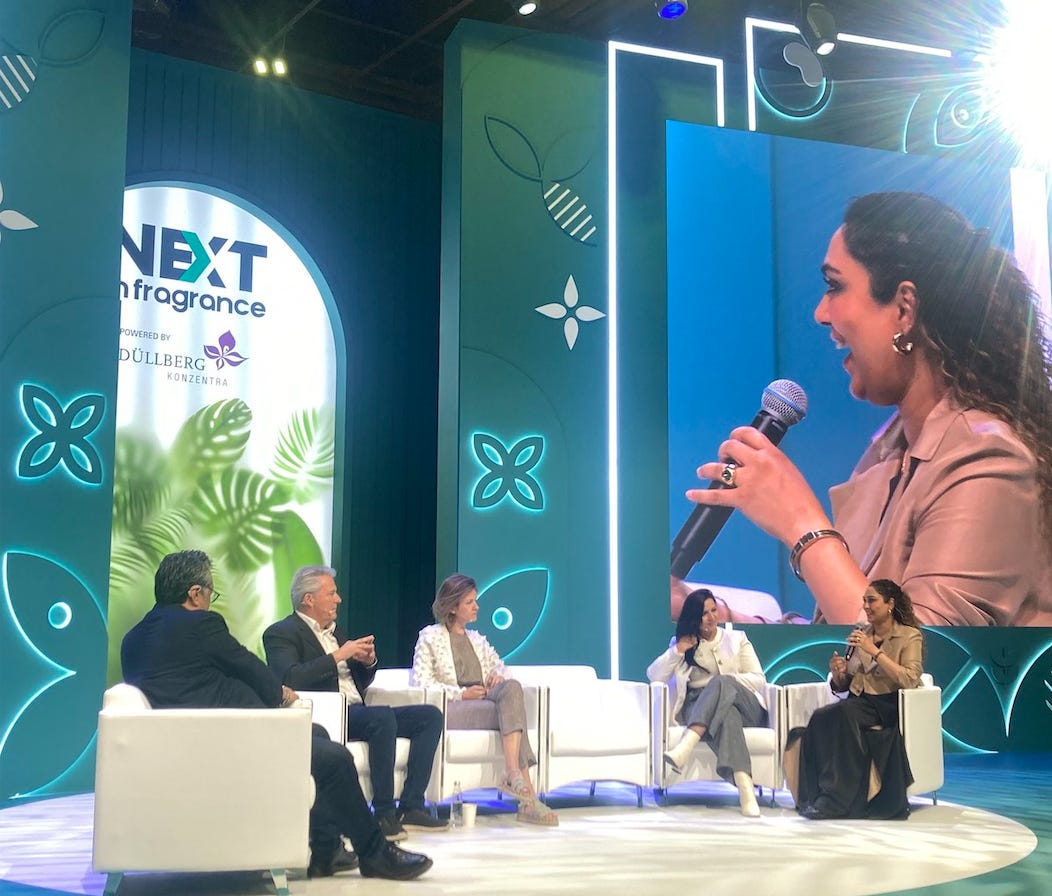
Fragrance brands must navigate a market where consumer loyalty is increasingly fragmented, digital tools and AI are reshaping experiences and global growth demands cultural sensitivity.
This was the key message in a Beautyworld Middle East panel discussion titled “The New Rules of Fragrance Retail” with Perfumist chief executive Frederick Besson, Centdegres artistic director Stéfanie Foissey, Tira head of dept retail education, artistry, service and strategy Dr Sadaf Shaikh and BellaVita general manager Namita Shrivastava.
They argued that success hinges on offering high-quality products alongside immersive, emotionally engaging retail and personalised storytelling.
Besson highlighted that “loyalty on fragrances has been challenged” and noted the sheer volume of products entering the selective segment.
“I would say more than three or 4,000 fragrances now released every year… which is about 10 times more than 20 or 30 years ago. Consumers are lost in the sea of a fragrance.
“It’s important to try to make consumers understand what’s in the fragrances, and where they should go,” he added, pointing to the emerging role of digital tools and AI in shaping choice.
Foissey argued that retail should offer more than just product access, describing stores as spaces to “reconnect with the emotions” and engage with a brand’s vision. DR echoed this sentiment, emphasising that “the real fragrance retail that we do face today is not competition, it is connection, it is trust.” Consumers increasingly transact online, but brick-and-mortar stores must provide sensory and emotional engagement to remain relevant.
Shaikh explained that success lies in creating “Goosebumps moments” and meaningful experiences, rather than simply generating footfall. This extends to staff training, she said, where understanding and storytelling are central to conveying a brand’s identity.
Smaller or niche brands face distinct hurdles with Shaikh noting that “brands really need to show what their DNA is all about. It is not about amplifying and creating your 100 scores. It is about being consistent, about creating that entire journey of… informative experience that brands can actually bring.”
Shrivastava highlighted innovative approaches, such as Chanel’s AI-driven fragrance lab, where customers explore their preferences without pressure to purchase.
“They’re not trying to sell you a particular product. They’re just trying to understand where you come from… what you like.” This approach signals a shift from product-led retail to a consumer-centric experience, combining technology with emotional engagement.
Meanwhile, the rise of Gen Z consumers is reshaping expectations. Besson explained that younger consumers seek uniqueness: “It’s not because you’re using your fragrance that others might be buying as well. It’s going to be unique… a mix of your own smell, climate, what you eat.”
Shrivastava observed that these consumers are trend-sensitive and platform-driven. She said: “They see an advertisement, they see a trend, they see a celebrity using it and they switch.”
Digital and AI tools are increasingly integrated into the customer journey. Shaikh and Shrivastava described experiences where AI and AR help consumers identify preferences and layer fragrances, creating what Shaikh called “a fragrance wardrobe.”
Retailers such as Boots are testing immersive hubs that match scents to mood and personality through technology, combining digital insight with the human touch.
According to Shrivastava, expanding internationally requires sensitivity to local preferences. She pointed out that fragrance consumption varies by climate and culture: “Brazil has the highest consumption of perfumes per capita. In the Middle East, you have gold-embellished jewel bottles. In Japan, it’s completely minimalist.”
Shaikh added that each market has its own olfactory psychology: “In the Middle East people wear fragrances for identity. In Asia it is more about well-being, self-love, Europe… memory.”
Brands must adapt both products and marketing strategies to resonate with local consumers, balancing global ambition with regional relevance.
Despite competition, there is room for innovation with Foissey arguing that new brands can tell bold, unique stories.
Besson added: “There is always room for new narratives… create another dreamscape for the customer,” noting that while hundreds of brands enter the market, few achieve significant sales, making storytelling, emotional connection and retail execution critical.
Shrivastava emphasised that initial differentiation relies on both product quality and marketing.
“Nothing beats a good product, good research, good use of ingredients and storytelling delivered to the end consumer.”
The panel agreed that a multi-channel approach, combining retail, digital, and immersive experiences, is essential to capturing attention, particularly for younger, digitally savvy consumers.
According to the delegates, brands must focus on authenticity, sensory engagement, and cultural relevance while leveraging digital tools to complement traditional retail. They said that success depends on connecting emotionally with consumers and creating experiences that go beyond a simple purchase.