
Beautyworld ME 2025: Roja Dove on crafting a global fragrance brand
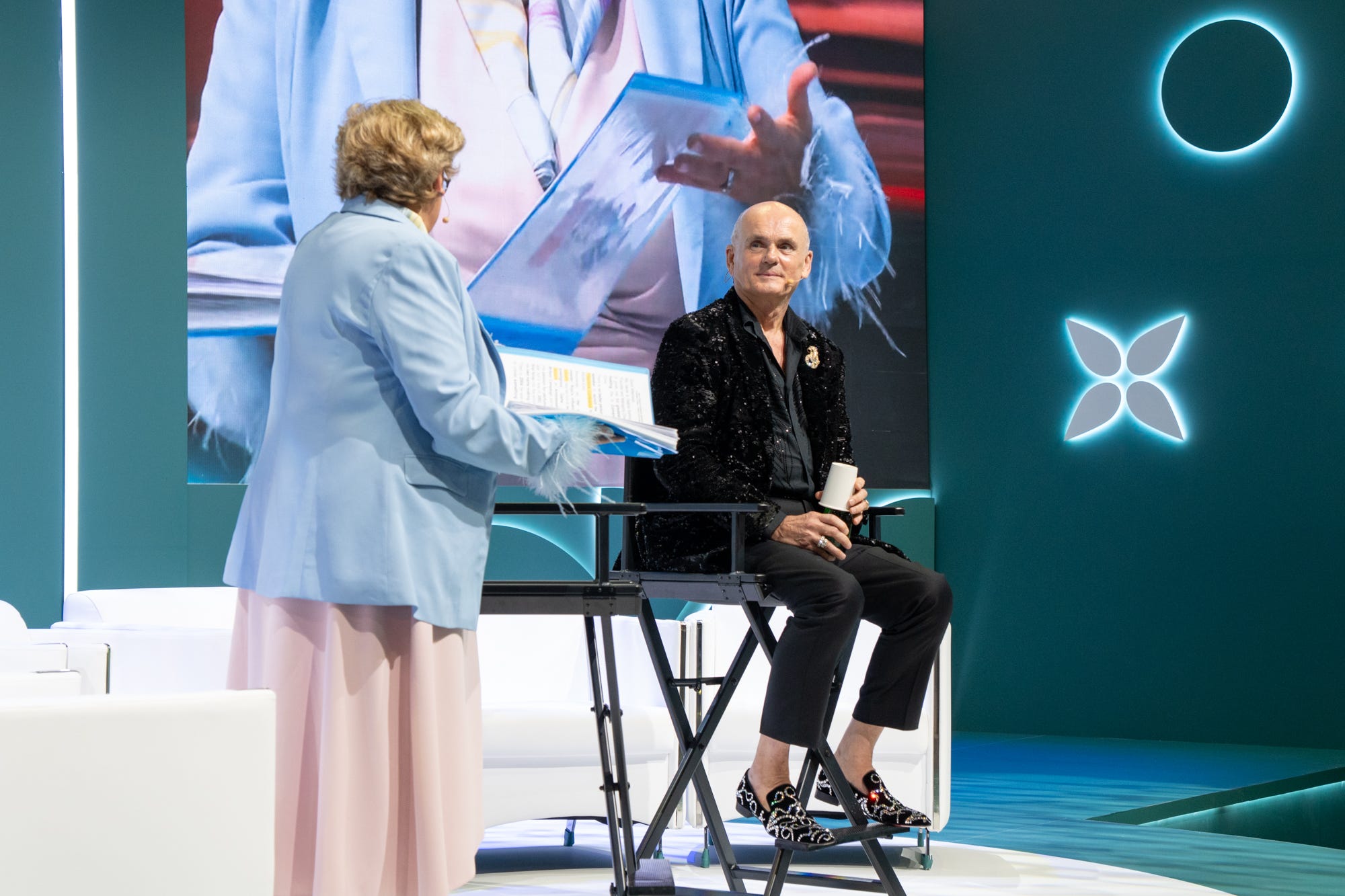
“Have a very firm idea of what you want, know the direction you want to travel in, and just go that way. If what you’re doing is any good, the money will look after itself.”
This was the guiding principle Roja Dove shared with delegates at the Next in Fragrance conference as part of Beautyworld Middle East 2025 held in Dubai’s World Trade Centre. The founder of Roja Parfums and ambassador for GREAT campaign drew on a career spanning bespoke creations, luxury launches and international brand building to offer insights for both established and aspiring perfumers.
Dove reflected on the early stages of his career and his breakthrough moment in 2001, when he was invited to open a perfumery at Harrods.
He said: “Before I even sat down for tea, they said, ‘We want to open a perfumery with you.’ It was the first of its type anywhere in the world. That experience, he explained, taught him the importance of being decisive and confident in his vision.
In 2011, Dove launched his commercial fragrance line. He said: “We sold out every piece of stock within 10 days,” noting that the entry price was £295 per bottle. He described this as validation that a clear vision combined with quality and timing could generate significant market interest, even in a high-end niche.
Central to Dove’s approach is maintaining complete control over the brand’s identity. He said: “People spend all this time wondering about the competition. Who cares? Really, who cares? If you wonder what other people do, you will never do anything for yourself.”
He stressed that consistency and attention to detail across every element, from packaging to fragrance composition, were critical to building a brand that stands out.
“Everything from the box to the crystal cap to what’s inside was how I wanted it to be.”
Dove also emphasised the importance of understanding cultural nuances when entering new markets. He highlighted the Middle East, where he adjusted the spelling of “oud” to “aoud” to respect local pronunciation and developed formulas that could be worn with traditional attire without staining garments.
He said: “It’s a tiny thing but shows cultural respect. We also made a special version called Crystal Parfum so someone wearing white can wear it without staining their clothes”.
He also reflected on the role of authenticity in heritage storytelling, stressing that genuine cultural connection cannot be manufactured.
He said: “I’m not based in the Middle East, but I came here. I travelled here regularly — two weeks every month for three years — so I really did get to know it. It’s about mixing with people and listening to what they have to say. I don’t think there’s another way to do it, because otherwise it doesn’t feel authentic.”
He explained that authenticity comes through direct exposure to people and culture rather than imitation or assumption.
He added: “Authenticity comes through exposure to people and cultures. You can meet Arab communities, you can get to know people from those regions if you can’t physically go there.”
For Dove, the purpose behind an oud-based product must be genuine. He explained: “It depends why there’s an oud-based perfume. If the only reason is that you think you can sell it, consumers might feel it’s a marketing product rather than something that comes from a real place of inspiration.”
Dove noted how the perfumery market is evolving, with independent brands gaining influence and social media creating opportunities for global recognition.
He highlighted: “You can start with nothing and, if people pick up on your brand, it can gain global recognition. Our younger clients, 18 to 24, are savvy and aware. You do not chase them, they find you if your brand stands for something.”
Dove said younger consumers are looking for authenticity and a story, rather than being marketed to directly, making brand identity and purpose more important than ever.
Dove also discussed the emotional power of fragrance saying: “A perfume has to be memorable. If it stands out in memory, people will come back for a second and third bottle.” He explained that a successful fragrance must create a sensory narrative, leaving a lasting impression that consumers associate with the brand and the personal experience of wearing it.
For those building a fragrance business, Dove highlighted resilience and a careful, step-by-step approach.
He emphasised: “You have to be prepared to fall over. A baby only learns to walk because it falls over. You learn from it, and next time you’ll walk a bit better. Do not listen to the doubters. Ask yourself, what have they actually done?.
“Do not try to grow too quickly. Do what you do and make it work.”
Dove said innovation would continue to shape the industry, including the potential use of AI in creating new fragrance molecules.
He said: “AI could be very interesting for developing new olfactive molecules… they give perfumers the opportunity to work on new things, pushing the industry in new directions.”
He also cautioned against copycat products, which he described as undermining creativity. “It’s horrendous. Copies can never smell like the original; they undermine creativity.”
Dove added: “Be prepared to fall over… and when you do, learn from it. Don’t chase trends, and don’t listen to other people. Know what your brand stands for, and the money will follow if your idea is good.”