
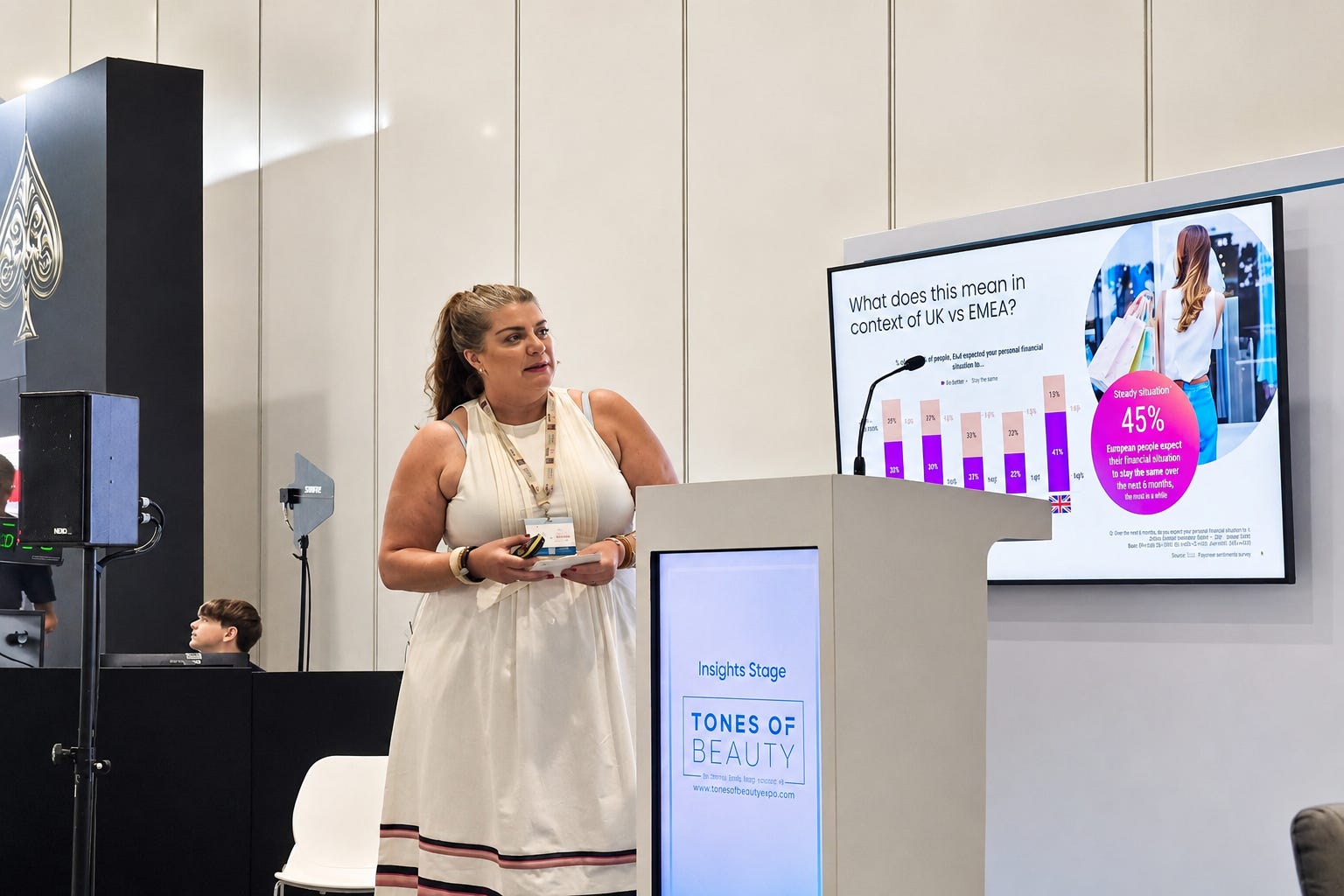
Brands that can demonstrate value, innovate effectively and create engaging experiences, both online and in-store, will be best placed to win consumers.
This was the main takeaway from a Tones of Beauty 2026 presentation by Circana VP and head of UK beauty June Jensen-Mills and Circana senior commercial and account manager Elizabeth Watson, which opened the two-day event.
Human connection
Jensen-Mills argued that consumers want to see “humans behind the brands,” pointing to platforms like TikTok as evidence of this shift towards authenticity and relational engagement.
She noted: “There was a stage where we were away from those connections, and I see that this is coming back. We’ve seen that we are definitely prioritising our health and wellness, so we are in line with our European consumers.”
She described beauty as becoming a form of escapism, suggesting that consumers are using beauty products as a way to express creativity but also temporarily stepping away from external pressures.
“We have a war on our doorstep, we have the cost of living crisis, so as a result people want to have that escapism, and beauty provides that to you.”
Value-led spending
According to Circana’s research, demand for beauty remains resilient despite cost pressures, with consumers prioritising beauty and wellness, but becoming more selective about how and where they spend.
Jensen-Mills said: “We’ve seen that consumers are more likely to go on fewer shopping trips, and they buy less. 10 years ago, you had that big shopping trolley, and people were running around in the store. Now it’s a little basket and much more considerate purchases.”
Prestige beauty is the go-to category in a cost-of-living economy at 10%, according Circana’s research, compared to mass beauty and fragrance at 2% and 1%, respectively.
Watson explained that beauty purchasing behaviour differs across segments. She said that mass-market consumers are more likely to trade down to lower-priced alternatives, while prestige shoppers are choosing to be more selective without compromising on quality.
Meanwhile, younger consumers face tighter budgets and therefore prioritise value and brands that are culturally relevant to them. On the other hand, millennials look for product quality and performance, while older consumers care about practicality and convenience.
Watson explained that younger shoppers are influenced by digital content, creators and social commerce, while older consumers continue to value familiarity, personal service and the in-store experience.
She said brands must adapt their strategies to reflect different consumer behaviours across age groups, with successful brands offering a combination of both approaches.
Innovation and ingredients
The presentation highlighted innovation as one of the industry’s most effective tools for maintaining consumer engagement. Watson pointed out the surge in fragrance and premium foundation launches, arguing that continuously innovating gives consumers a reason to keep buying.
There is also a focus on overall health and wellness, which is reshaping purchasing decisions across the beauty industry, as consumers make healthier lifestyle changes.
Jensen-Mills explained: “It’s a great opportunity for those who are thinking about either setting up a brand, having an idea, or having already established a brand: how can you rejuvenate those messages?
“We saw how Unilever, as an example, has done a great job in rejuvenating Vaseline and Dove, in terms of body and hand care. That’s a really good example of how they have established brands and made a really rejuvenated journey across various channels, from TikTok to retail”
At the same time, consumers are becoming more knowledgeable about ingredients and expect makeup to deliver skincare benefits. Watson noted that skincare claims and natural ingredients have become influential, with consumers looking for scientifically backed formulations.
She said: “We’ve seen more sophisticated ingredients being listed on products like ectoin. I feel like 20 years ago people wouldn’t have had any idea what that was, but now consumers are becoming more educated.”
According to Circana’s research, azelaic acid searches peaked in April with an average of 66% of peak searches across the last year, Indicating a growing interest.
Online vs brick and mortar
Online has now overtaken as the largest beauty sales channel, mainly due to more product choice, promotions and convenience.
According to research from Circana, better prices in the key driver for online beauty purchases in Europe at 37% followed bt discounts & promotions at 31% and a wide selection at 30%.
TikTok Shop, in particular, was noted as a key sales and marketing channel, successfully launching products exclusively before seeing traditional online and in-store retail demand.
However, Watson stressed that physical stores remain vital for product discovery and trial, particularly in department stores, which remain destinations for fragrance, while health and beauty retailers perform strongly in skincare and haircare.
Watson added: “Shoppers are understanding how you can try something in store, but know that often there are lots of online promotions and discounts.”
She argued that different retail environments continue to play distinct roles across beauty categories. In the UK, there has been a renewed focus on physical retail, particularly in categories like haircare, where in-store trial remains key.
There is particular value in retail operatives who educate and guide customers through products and complex ingredients to help them decide on their purchases.
Watson added that a combination of loyalty schemes, price-matching initiatives and being able to find value at a single retailer has reduced the need to visit multiple stores. She said that brands should focus on increasing basket value rather than simply driving footfall.
“The promotion periods are becoming longer and much more extended as retailers try to engage that shop out earlier.”
Beauty is expected to remain resilient despite prolonged cost-of-living pressures, but brands should be watching closely to see how spending habits continue to evolve.